I am extremely excited to announce that we have been given the opportunity to start a VESS FAMILY DNA PROJECT!
A huge thanks to Marilyn Barton, for allowing us to revive her Vess Family DNA project on Familytreedna.com and also, a huge thanks to Michael Travers and Vincent Vess for managing it for us!
How To Join?
To join and participate, you must have an account with Familytreedna.com.
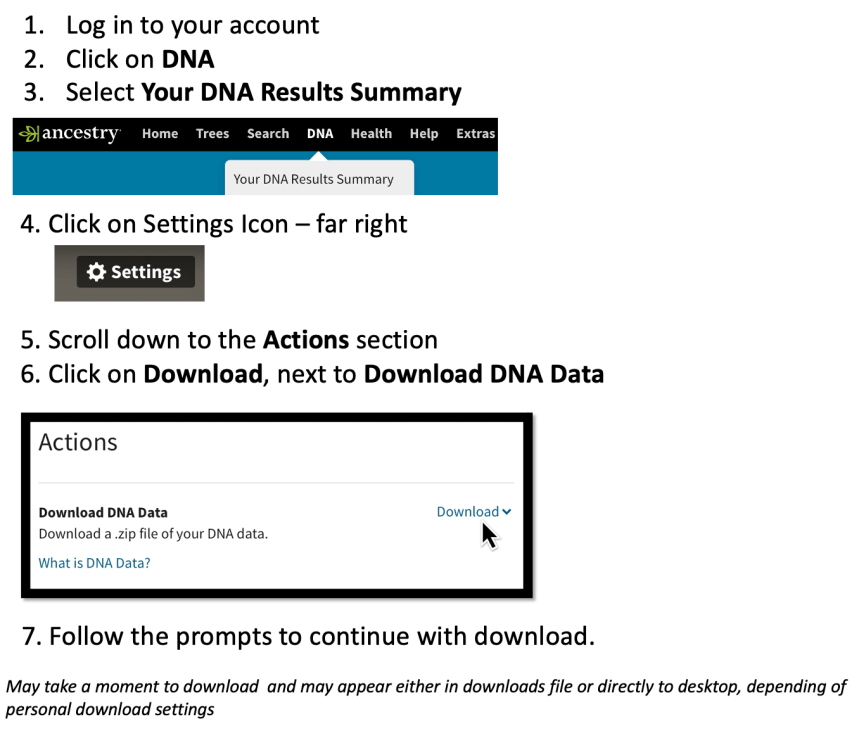
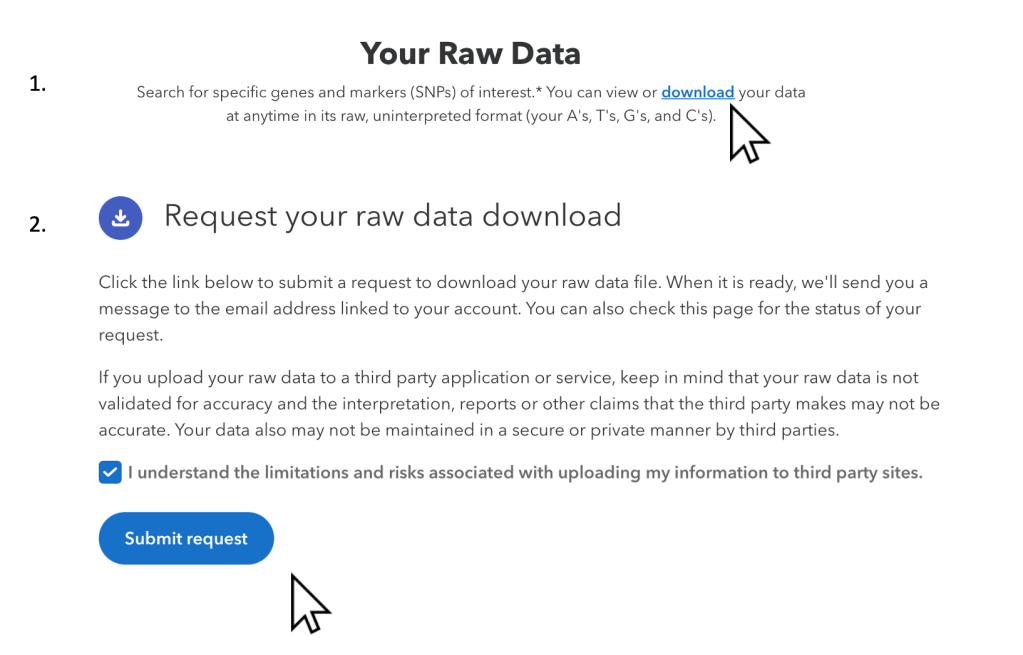
Click on this link for step-by-step instructions from yourdnaguide.com.
How Long Does The Transfer Process Take
Familytreedna.com states it takes 3-5 business days to process, but some reviews state it could be as quick as a few hours; it all depends on how many transfers they have to process (it’s a queue system).
However, you can join the Vess Family DNA Project and explore public Haplotrees while you wait for your results to process.
$19 To Access Additional Tools
It is my understanding that a free account opened by transferring DNA results from another vendor, allows you access to FamilyFinder and DNA Projects. However, one must pay $19 to unlock additional tools such as the Chromosome Browser, MyOrigins, and AncientOrigins.
Which isn’t that bad, considering you’re not having to buy an expensive DNA kit again or pay any kind of subscription to continue to access information.
Who Can Participate?
Any member of Familytreedna.com can join the Vess Family DNA Project! It is my understanding that this DNA project is not restricted to any specific type of testers and thus, all DNA tests are able to provide valuable information to the project.
Information provided by Autosomal DNA testers (both genders) allow us to make new family connections.
Information provided by mtDNA testers allow us to explore maternal roots.
Information provided by Y-DNA testers allow us to identify and connect different VESS/ VOSS/VASS/ VEST family lines.
Information provided by Big-Y testers allow us to further investigate and unravel the mystery between the Vess and Travers families.
The more participants, the more DNA information we can obtain and analyze, and then the more connections we can make!
Transferring Y-DNA Test Results
If you have already done a Y-DNA test through a different company that used the Sorenson 33 or 46-marker test, you can transfer your results to Familytreedna.com to participate in the Y-DNA portion of the Vess Family DNA Project.
Vess Genealogy has been stuck at a massive roadblock for generations. In my opinion, I believe there was a name change.
Records do exist. Either we are missing the places they might be (due to county changes) or we are overlooking records, because the surname is indexed wrong due to illegible handwriting.
Our ancestors lived in an area during a time where county lines were constantly changing, which means there are probably some counties that we may never in a zillion years ever think to look for records.
The biggest reason I believe records do exist is because so many other early families of western North Carolina have a paper-trail.
Okay, it is not exactly the neatest of paper-trails for that when you get into early records (early 1800’s and back), surnames are really butchered (horribly misspelled) to the point that even if you squint and look at it sideways, it might (if you shout it from a distancewith a little echo) sound phonetically similar to the surname that it was meant to be. So, in most cases, it is the content that usually confirms the persons identity more so than the indexed surname linked to the record.
My point is, if a good portion of early families in the same area have records, there is a good chance the Vess family also has records. Unfortunately, there are too many different surname variants and counties to explore. If we want to move forward a little faster, perhaps genetic genealogy can help us.
Check out this cool video below – A North Carolina dialect that evolved independently due to isolation since the 1600’s. If that is anywhere close to what our ancestors used to talk like, no wonder names were horribly misspelled.
What Is Genetic Genealogy
It is my understanding, as I am 100% new to this, that genetic genealogy is a new approach to tackling difficult ancestors who do not want to be found.
Instead of digging through dusty old archives for records to make family connections, we can now make family connections with the help of DNA relatives. Unfortunately, the name of our stubborn ancestors are not embedded into our DNA, but DNA-relatives can point us in the direction, like a compass, to locate genealogy records that might help us identify a common ancestor.
Essentially, the idea is to use both methods (DNA and records) together to quickly and more accurately make new connections on the family tree.
Y-Chromosome DNA Testing is GOLD
Y-Chromosome DNA testing is gold, but without a lot of participants, it can also be lead.
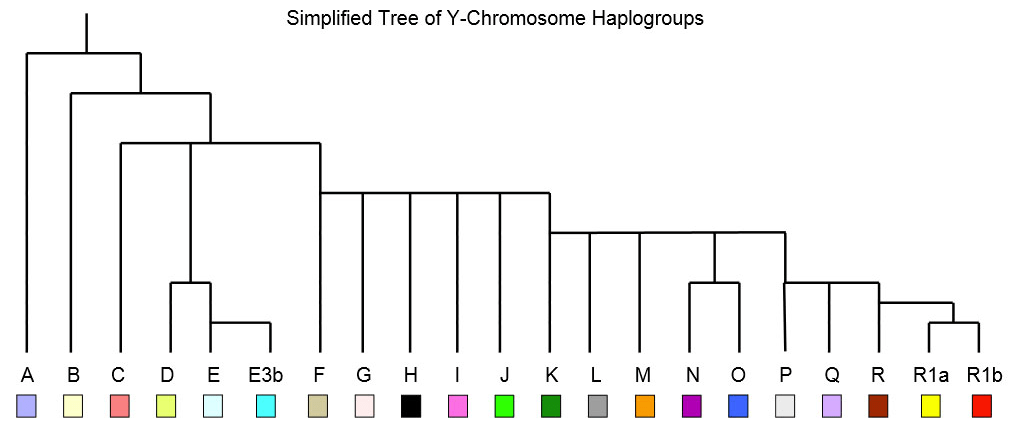
Every male descendant carries a gene called a Y-Chromosome. Geneticist’s extract the DNA from the Y-Chromosome, analyze it and assign it to a Y-Chromosome Haplogroup (A-R).
A haplogroup consists of a group of people who share very similar DNA with one another suggesting a single common ancestor. An extremely ancient common ancestor.
The more people who participate in Y-DNA testing, the more these Haplogroups can be broken down into smaller groups called a subclade. Subclades are subgroups of Haplogroups. Assignment is largely based on single nucleotide polymorphisms (SNP’s), which are specific mutations that correlate to specific paternal lines. Every time a mutation occurs over thousands of years, that genetic line branches off into a new subclade (or so that is my vague understanding of it).
As more DNA is collected and analyzed, the subclade may change; either resulting in grouping more people together into one subclade (moving from one existing subclade to another existing subclade) or having enough new information to create an entirely new subclade.
The VESS family is assigned to Haplogroup R. Haplogroup R has many different branches (subclades).
When members of the VESS family submitted their DNA, a new subclade was created where they were grouped together with the TRAVERS family (we are closely related), and then, when some members of the VESS family completed the BIG-Y Chromosome test (a more in-depth analysis), the VESS family was later assigned a new subclade although still grouped together with the TRAVERS family. This suggests a mutation.
It is interesting that our group has two different surnames and it kind of makes you wonder who came first: TRAVERS or VESS?
Did a male descendant of the TRAVERS family take the VESS surname, maybe from a step-parent, or was adopted by a VESS family or vice versa. There is also the possibility that our common ancestor could be from a time when surnames didn’t exist. OR we aren’t as closely related as we think and as more people begin to test, the VESS and TRAVERS family might drift apart into two different groups. The only thing I know for sure, is that it is a mystery we cannot solve today.
However, we did identify a new VESS line using Y-Chromosome testing: Willis Vess of Alabama.
The best thing about this DNA database, is that participants often note their oldest known ancestor which gives genealogists a specific location on a map to look for genealogy records. Although we know Andrew Logan Vess and Willis Vess are related, we have yet to determine how they are related to one another on the VESS family tree.
This is what I mean by Y-Chromosome DNA testing being gold but also lead. It has the potential to unravel many VESS mysteries, but without more participants, those mysteries will remain in the dark.
Male descendants carrying the VESS surname or one similar to it (VASS, VOSE, VOSS, VEST, VAUX, etc) are greatly encouraged to participate in Y-DNA testing through Familytreedna.com as there might be a genetic connection.
Autosomal DNA Testing
While Y-Chromosome DNA testing is a more direct route to identifying our paternal ancestors, autosomal DNA testing is more or less like taking the scenic route.
Y-Chromosome DNA tests provide you a much bigger genealogical timeline of just one paternal line that dates back to ancient times, whereas ancestral DNA tests are autosomal, which means they only go back 6-8 generations and is saturated by DNA-relatives on both sides of the family (paternal and maternal lines).
For me, my DNA-relatives related to the VESS line would mainly consist of descendants of Andrew Logan Vess (my third great-grandfather-6th gen). It would just barely (if at all) pick up DNA-relatives descending from Peter, Nathan, and Willis Vess or even their parents. It greatly depends on how many of their descendants have submitted an ancestral DNA test and just how far they descend down the Vess-family line.
With an 8-generation family tree, a DNA test by my mom, and access to DNA information provided by a close family member who is a generation older than me, I have been able to identify DNA-relatives specifically connected to the VESS family line via a lengthy tedious process of elimination.
Fortunately, my mom’s DNA test does half the work for me by identifying DNA-relatives on her side of the family. Then, I look at shared DNA relatives with the family member who is a generation older than me to further identify DNA-relatives that are most likely VESS-related. Because this family member is a generation older than me, their DNA test would detect more DNA-relatives, those who are too distant to be detected by my DNA test.
Any DNA-relative with less than a cM count of 8, do not make it onto the DNA-relatives list (it’s too distant), even though there is a relation on the family tree. In theory, it would probably be best to have our grandparents do an ancestral autosomal DNA test. cM (centimorgan)= the amount of shared DNA.
My Search Method
I started by making a list of DNA-relatives who carry the VESS name. Next, I made a list of DNA-relatives with the VESS name who also have a public VESS family tree. Lastly, I made a list of DNA-relatives who do not carry the VESS name, but have a public family tree showing they descend (at one point) from a VESS family member.
For each DNA-relative listed, I noted their oldest known ancestor (some I had to research a bit) and I also had to check their shared-relatives list to make sure they didn’t share DNA with my mom (which was the most time consuming part).
My Discoveries
At a glance, autosomal ancestral DNA tests tell us nothing; except, we have a lot of cousins. But after an extensive process of elimination, then entering the information into a spreadsheet, and finally organizing the information from closest DNA-relatives to most distant DNA-relatives does it actually start to get interesting.
1) As expected, majority of our shared DNA-relatives are descendants of Andrew Logan Vess.
2) As you scroll down towards more distant DNA-relatives, we start to see connections with Willis Vess. Based on this, we can probably confidently say that Willis and Peter Vess are very closely related.
3) Willis Vess seems closer to us than Nathan Vess; which may suggest Nathan’s line has either ended or not many of his descendants have done an ancestral DNA test.
4) Also as expected, the autosomal DNA tests just barely detect DNA-relatives who are descendants of Josiah, Alfred, and Alexander Vess (brothers of Andrew Logan Vess).
5) Interestingly, there are a few DNA-relatives whose oldest VESS ancestor is one I do not recognize:
–Susan Ann Elizabeth VESS (b. 1856 Rutherford Co. NC) and Columbus MCGINNIS *connected to Ledbetter tree and father is noted as Thomas William VEST of Tennessee
–Elizabeth Louise VESS (b. abt 1845 North Carolina) and William LANNING (marriage Henderson, NC)
–Everline VESS and James STEWART (marriage Colbert, Alabama)
–James Marvin VESS (b. 1853 South Carolina) and Sallie Octavia SPRUELL
**One of the Elizabeth’s might be the daughter of Peter Vess
6) But even more interesting are DNA-relatives whose oldest VESS ancestor is Addison Vess/Vest.
You would think this is a solid connection to the VEST family of Virginia, but if you look at the family trees for Addison VESS/VEST, they are not well documented and there is no consistency with Addison’s children or parents, which is a RED FLAG in genealogy.
Final Conclusions
I am not an expert, so please keep in mind my search method could be flawed and thus the information within this post could be highly inaccurate.
We still do not have enough information to find new ancestors, but we do have enough genetic evidence to start digging deeper into the life of Willis Vess without wondering whether or not we are wasting our time. Yes, Y-Chromosome testing confirmed he is related to Peter Vess, but autosomal DNA testing suggests the relation is much closer than we think.
Also, we might want to start to investigate Addison VESS/VEST for that his name appeared quite consistently in the chart below. The reason he showed up, is because his descendants some how took on the VESS name rather than keeping the VEST name like other VEST families; in which I think is intriguing. Why did this particular VEST line evolve into a VESS line?
 Vess Genealogy